 EnaGuard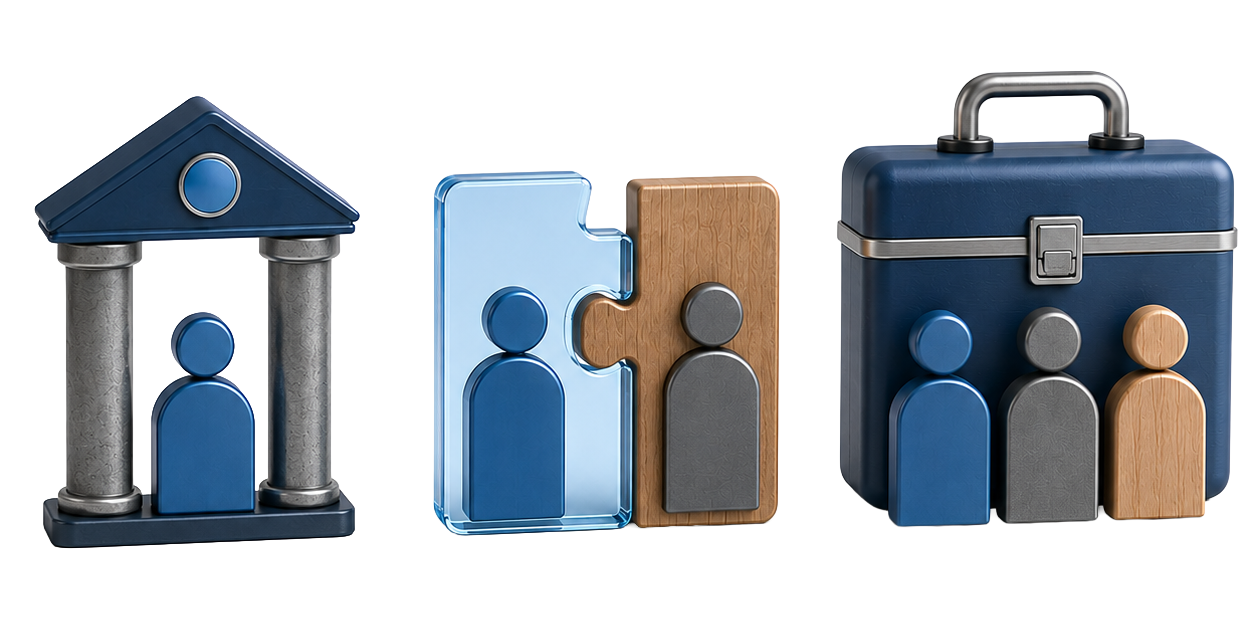
Who performs the work changes what can be claimed
Signal, Focus, and Verify describe the assessment layer. Delivered, Co-source, and Licensed describe who performs the work. EnaGuard keeps these two axes separate because independence is part of the result.
Delivered
EnaGuard consultants perform the work, write the findings, and EnaGuard owns the assessment opinion. The strongest EnaGuard third-party independence and external claim can be established in this model only when scope, evidence, sampling, challenge, and QA gates support it.
Co-source
The client internal audit or risk team performs part of the fieldwork. EnaGuard consultants provide methodology, control interpretation, technical depth, and QA.
Licensed
The organization licenses EnaGuard methodology and tools for internal use by authorized assessors, once methodology transfer, calibration, and QA rules are in place. It scales capability, but it is not third-party assurance.
The model determines the claim
| Delivered | Co-source | Licensed | |
|---|---|---|---|
| Signal | Independent expert diagnosis | Shared diagnosis | Internal self-diagnosis |
| Focus | Independent limited assurance | Shared limited assurance with EnaGuard QA | Internal limited assurance |
| Verify | Independent third-party assurance | Joint assurance, independence protected through EnaGuard QA | Internal assurance, not third-party assurance |
Claim boundary: Assurance language on this page describes the claim level supported within the EnaGuard methodology by scope, evidence, sampling, challenge, QA, and operating model. It is not a certification, legal opinion, or compliance opinion.
Some boundaries are not negotiable
Assessed teams are not the referee
CIO and CTO teams are critical evidence providers and action owners. For Focus and Verify, they should not be the sponsor of their own assessment.
External claims require external work
A licensed organization can produce strong internal assurance, but it cannot present its own work as independent third-party assurance.
QA protects the language
The report must say what the evidence supports: diagnosis, limited assurance, internal assurance, or independent assurance.