 EnaGuard
Your deployment model determines which controls come first
A government agency and a SaaS company don't share the same priorities. EnaGuard places your organization first by deployment model (Air-Gap, Hybrid, Cloud-First), then by industry.
Air-Gap / Fully Isolated
Environments with no, or minimized, external network connectivity.
- Defense & Aerospace
- Intelligence
- Critical Infrastructure
- Government & Public Services
Hybrid / Restricted Cloud
Critical data stays on-premises; the rest can move to the cloud.
- Banking & Insurance
- Healthcare
- Telecom & Energy
- Manufacturing & Logistics
Cloud-First / Unrestricted Cloud
Scale and speed come first; data location is flexible.
- SaaS
- Retail & E-commerce
- Digital Platforms
How the three segments compare
| Air-Gap | Hybrid | Cloud-First | |
|---|---|---|---|
| Data Residency | Fully on-premises / isolated | Critical data on-prem, rest in cloud | Typically cloud-hosted |
| Real-Time Latency Tolerance | Very low: instant decisions are critical | Moderate | High: flexibility is the priority |
| Human-in-the-Loop Approval | Required for nearly every action | Required for high-risk actions | Optional for low-risk flows |
| Explainability Expectation | Very high: auditability is core | High: regulation-driven | Moderate: UX-driven |
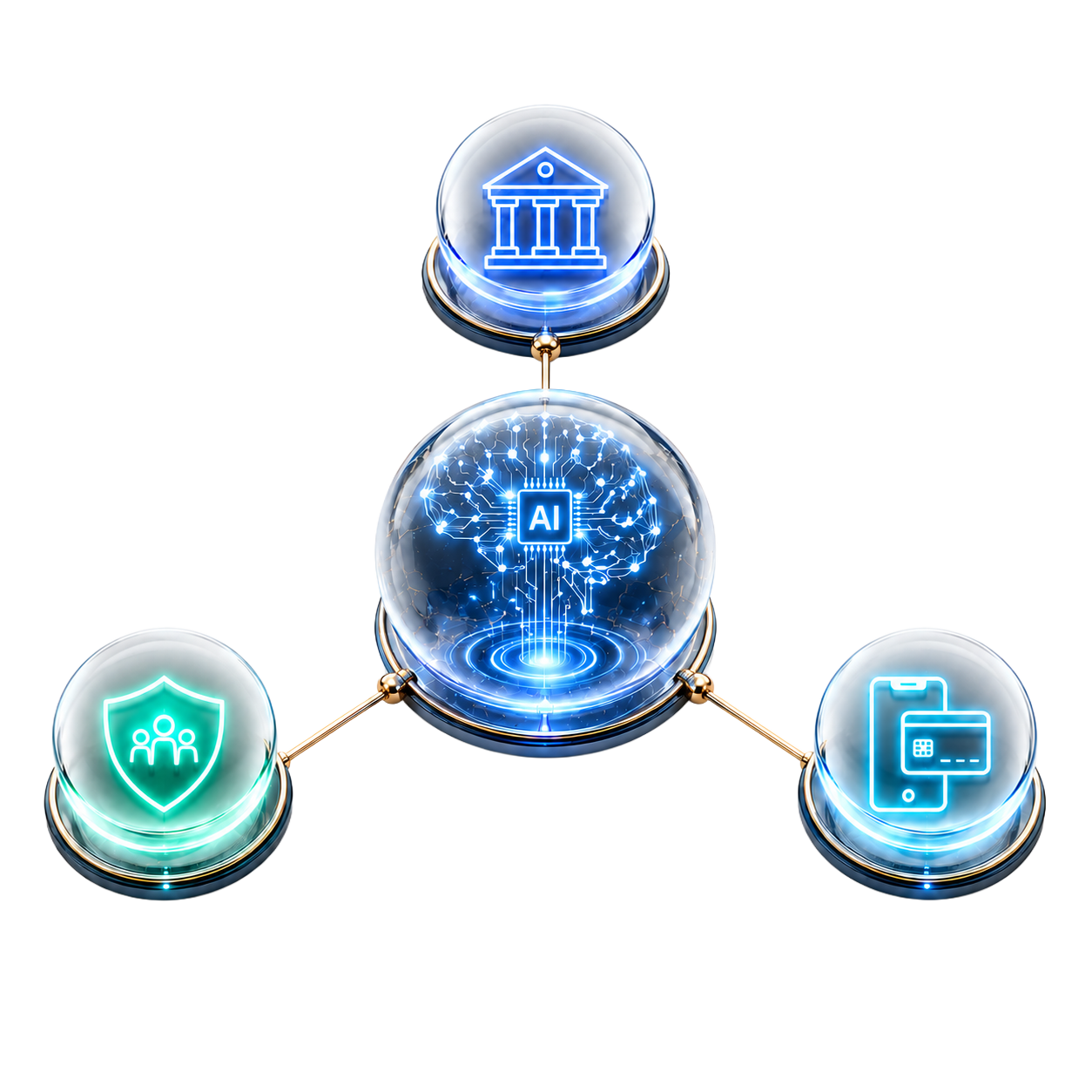
Banking, Insurance, Fintech/Payments
Architecture determinants: Regulatory density, real-time transaction volume, fraud-detection sensitivity.
Scenario: A bank's credit-scoring model runs correctly in production, but the auditor can't get an answer to "why this decision?" within 48 hours.
- Can we explain model decisions in a way that holds up to a regulator?
- Do AI components in payment/credit flows fall back to human approval in a failure scenario?
- If the third-party model provider changed, would our compliance evidence go with it?
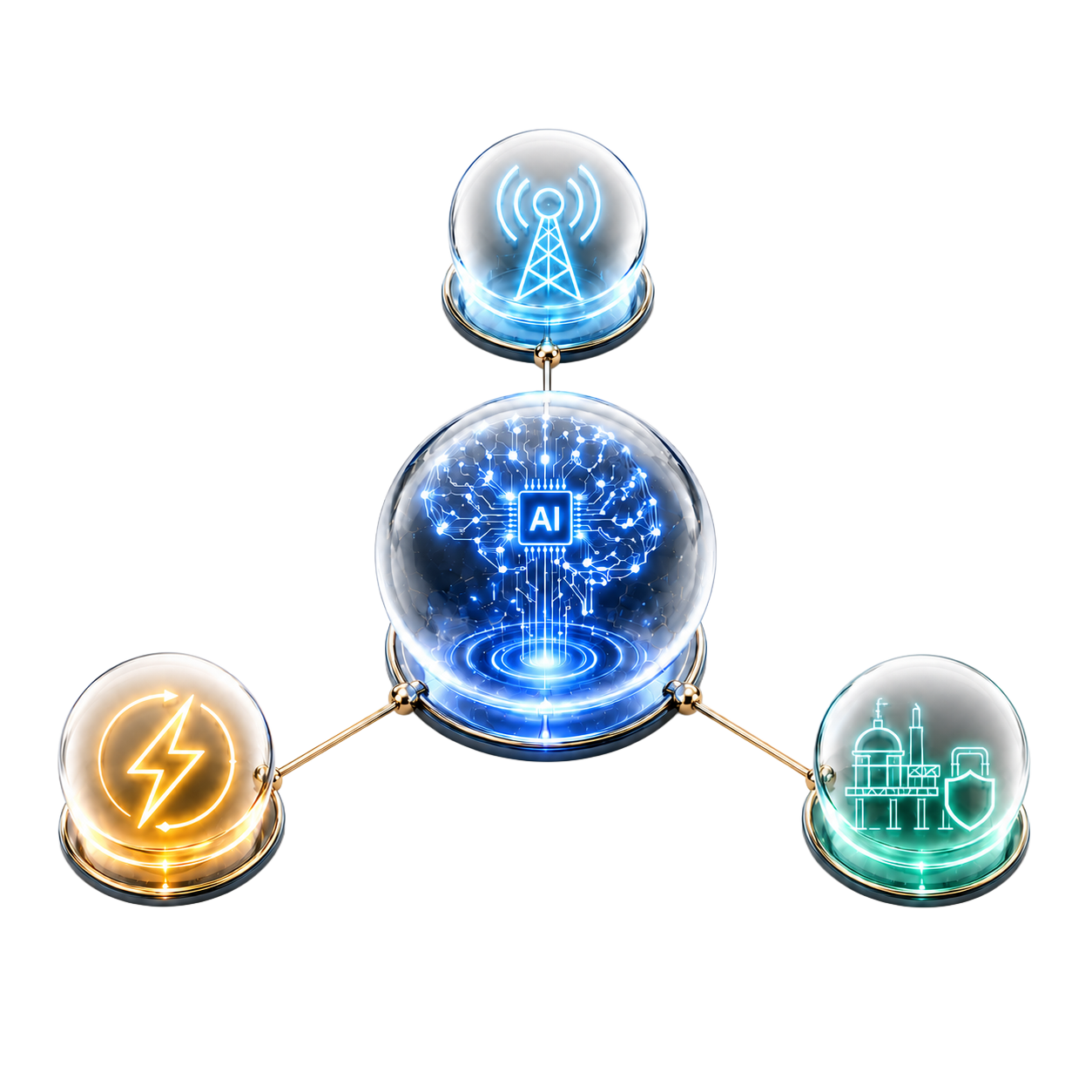
Telecom, Energy, Critical Infrastructure
Architecture determinants: Uptime requirements, OT/SCADA integration, national-security sensitivity.
Scenario: An energy utility's demand-forecasting model flags an anomaly as "normal"; no one notices until an outage occurs.
- Does the AI system make critical infrastructure decisions autonomously, or does it always pass through human approval?
- Are AI components at the OT/IT boundary compliant with network-isolation requirements?
- How many layers catch a model error before it becomes a physical outage?
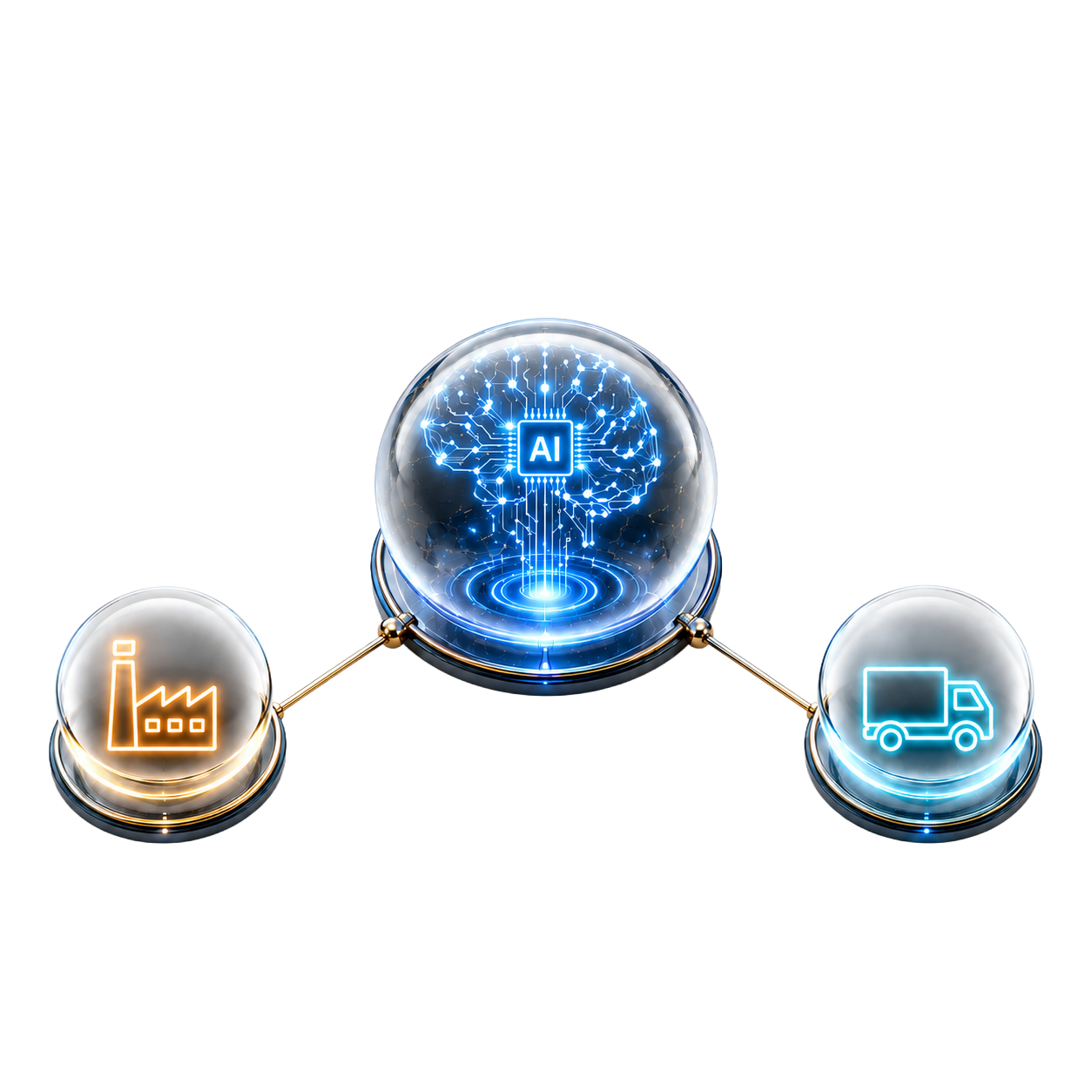
Manufacturing, Logistics
Architecture determinants: Supply-chain visibility, predictive maintenance, multi-site operations.
Scenario: A logistics firm's route optimization silently keeps producing decisions from stale data during a regional outage.
- Does the AI detect and flag degraded data quality, or does it silently produce bad decisions?
- Do operational data from different sites converge into one consistent architecture?
- Is the gap between model recommendations and human operator decisions tracked?

Healthcare, Pharma
Architecture determinants: Patient-data privacy, legal liability of clinical decision support, regulatory approval processes.
Scenario: A hospital's diagnostic-support model is 95% accurate, but no one has analyzed which patient profiles the wrong 5% clusters around.
- Does a clinician always make the final call on clinical AI recommendations, or is it autonomous in some flows?
- Do we know which patient groups model errors cluster around?
- Does patient data ever leave the organization during model training or inference?

Government & Public Services, Defense & Aerospace
Architecture determinants: Full isolation requirements, supply-chain security, the highest bar for auditability.
Scenario: A government agency's internal AI assistant runs on a closed network, but still pulls its updates from an external cloud service.
- Is the system genuinely air-gapped, or only "isolated" by network segmentation?
- Do model/data updates carry an external dependency that breaks isolation?
- Is the full audit trail of every AI decision ready for external verification?

Retail, E-commerce, Digital Platforms
Architecture determinants: Speed of scale, personalization, multiple third-party integrations.
Scenario: An e-commerce platform scales its recommendation engine 10x for a campaign; it holds up, but cost traceability doesn't, and the bill shocks everyone afterward.
- Is scaling a pre-tested capacity, or "we hope it holds"?
- How does an outage at a third-party model/API provider affect the customer experience?
- Does cost stay predictable as usage grows?

Holding & Group Companies
Architecture determinants: Multiple business units, uneven maturity levels, the need for one consistent governance view.
Scenario: One business unit in a holding company is at "Proven" on AI, another is still at "Declared", but leadership sees both as "ahead on AI" on the same slide.
- Do we have one consistent view of AI maturity across business units?
- When a capability is proven in one unit, is it transferred to others with the same level of evidence?
- Does group-level risk reporting reflect the weakest link, or the strongest example?